20 May, 2026
Learning self-defence: what it is and how to get started
Feeling free and safe on the street, at work and on a night out. That sounds like a given, but it’s far from true for everyone. Learning self-defence helps people feel more confident and more at ease in everyday situations. Except good self-defence turns out to work very differently from how most people imagine. And before you brace yourself, that’s actually good news. In this article, you’ll read how it really works and, of course, how to get started.
For many people, learning self-defence is the reason they take up a sport in the first place. Yet plenty of misconceptions surround it. Self-defence isn’t a bag of tricks for taking down an attacker. It starts long before any conflict arises or any blow is ever struck. In this article, you’ll read what self-defence really involves, which techniques and exercises are part of it, and how you can get started in Amsterdam.
What is self-defence?
Self-defence is the whole set of skills that keep you safe: recognising and avoiding situations, setting boundaries with your posture and voice, de-escalating wherever possible, and physically defending yourself when it’s genuinely necessary. Physical technique, then, is just the final piece of a much bigger picture. The real gain lies elsewhere: when you feel resilient, that shows, and when you can stay calm in a stressful situation, you can make better decisions. That’s why the most important part of learning self-defence is working on your confidence and body awareness.
Self-defence as a sport
You can train self-defence by practising a regular sport, which has real advantages over a one-off course. With a defensive sport such as Wing Chun, judo or krav maga, you train your skills week after week, so your reactions become embedded in your body rather than your head. Under stress, techniques you’ve only ever practised once won’t do you much good. Regular training also makes you fitter, stronger and more self-assured, and, as we’ve already said, those are precisely the qualities that often prevent conflicts before they ever arise.
Techniques and exercises
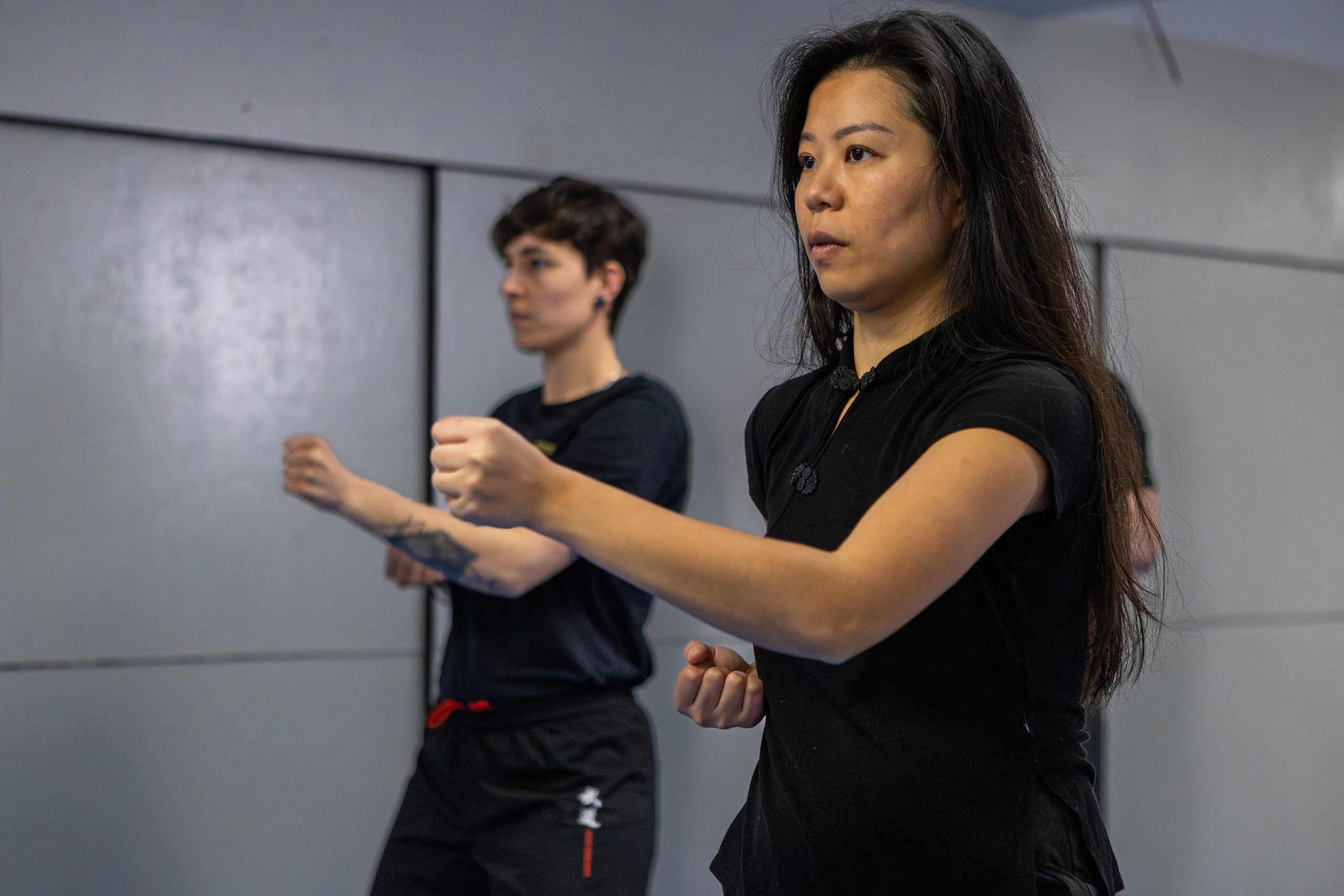
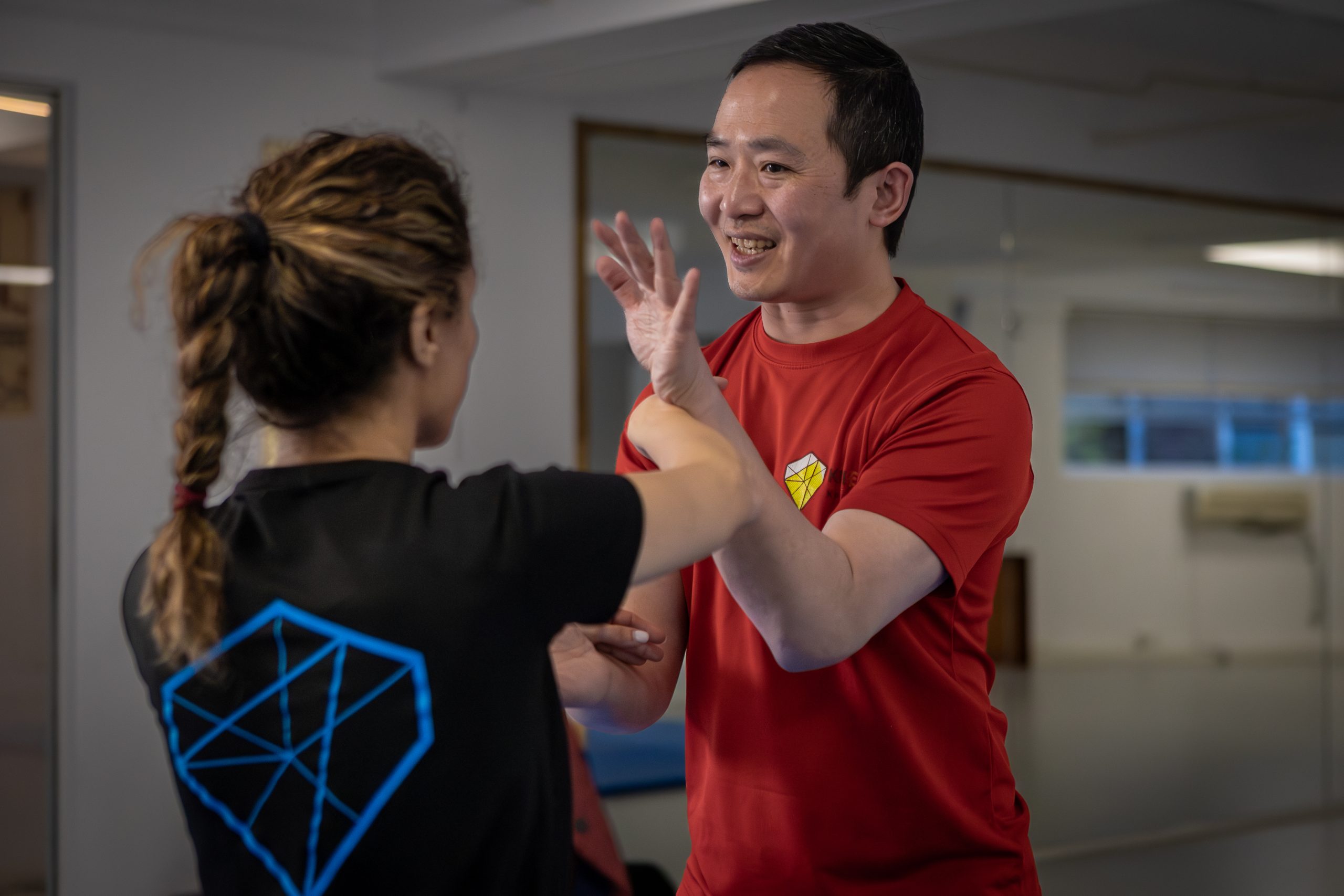
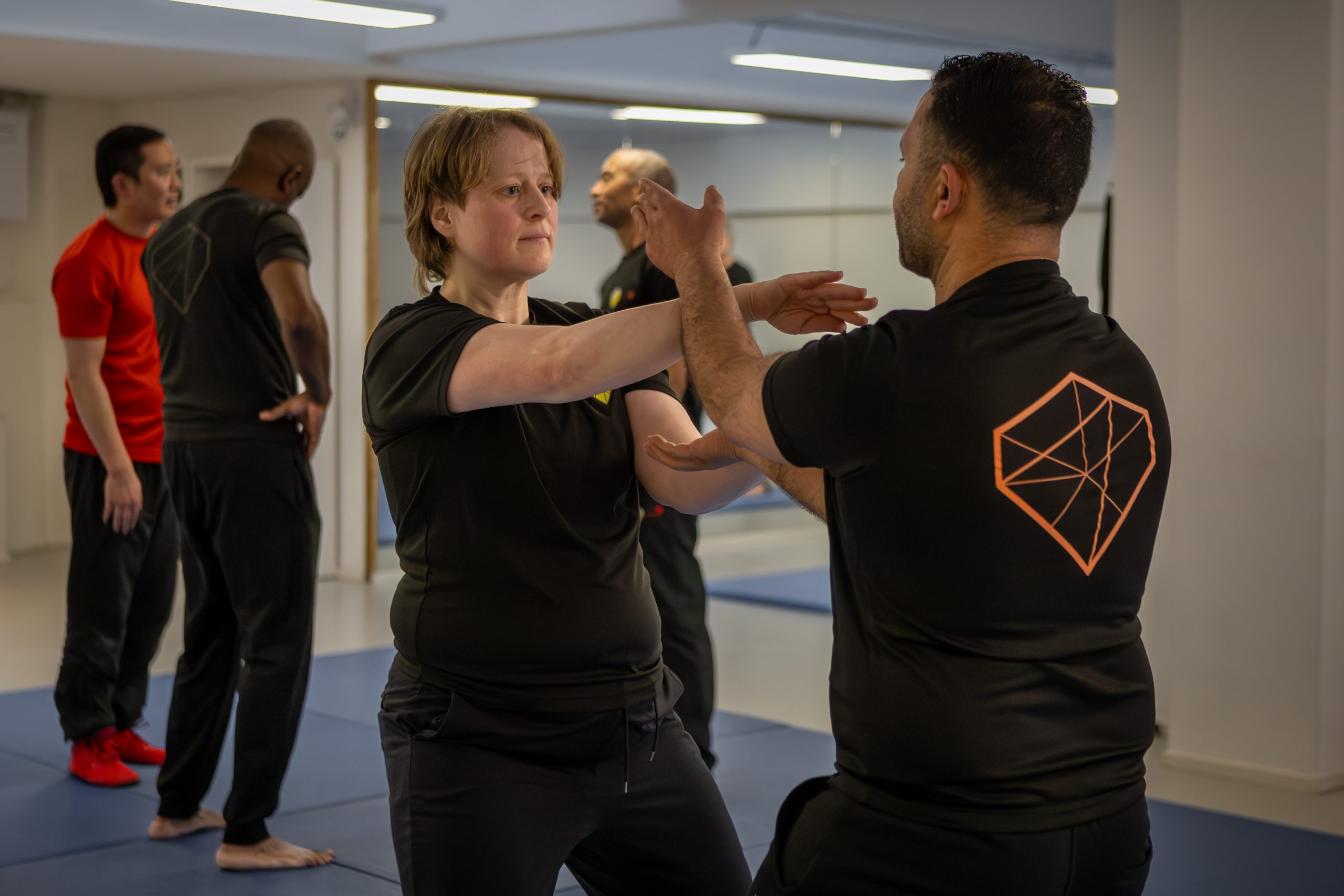
In a good class, you first learn the basics: standing firmly, staying relaxed and controlling your breathing. Techniques follow after that, such as blocking strikes, freeing yourself when grabbed and creating safe distance. At KEI, we train these skills through Wing Chun, a martial art designed for close-range self-defence (the range at which confrontations almost always take place). Many people, for instance, really enjoy chi sao, an exercise in which arm contact teaches you to feel what your partner is about to do before you even see it.
What matters more than any single technique is what lies beneath it. Applying a technique in class is nothing like a stressful situation on the street; it’s body awareness that actually helps you stay calm and think before you act in that moment.
Self-defence is about far more than learning a set of fighting techniques. Before you learn to control someone else, you first need to develop more control and awareness of yourself. That means getting to know your balance, your posture, your breathing and the way your body reacts under pressure. We develop these qualities through partner exercises, adding more resistance and pressure step by step. Techniques remain important, but body awareness gives you the foundation to apply them more naturally, and to adapt when a situation doesn’t unfold exactly as planned.
Taking a course in Amsterdam
Anyone looking for a self-defence course in Amsterdam has plenty of choice: from short workshops spanning a few evenings to ongoing training at a martial arts school. A short course is a good introduction and gives you useful basic principles. If you want those skills to keep working under pressure, opt for structured, ongoing training instead. When choosing a school, pay particular attention to the guidance on offer: are you genuinely seen and supported as a beginner, is there attention to safety, and is the atmosphere good and respectful? It’s also worth asking how the lessons are structured. A good school works with a clear learning path, so you’re not just picking up random tricks every week but building skills step by step that “stack” on top of each other, giving you more and more tools to draw on in difficult situations. That said, there’s only so much you can find out by asking; ultimately, a trial lesson tells you far more than any website.
Learning self-defence at KEI
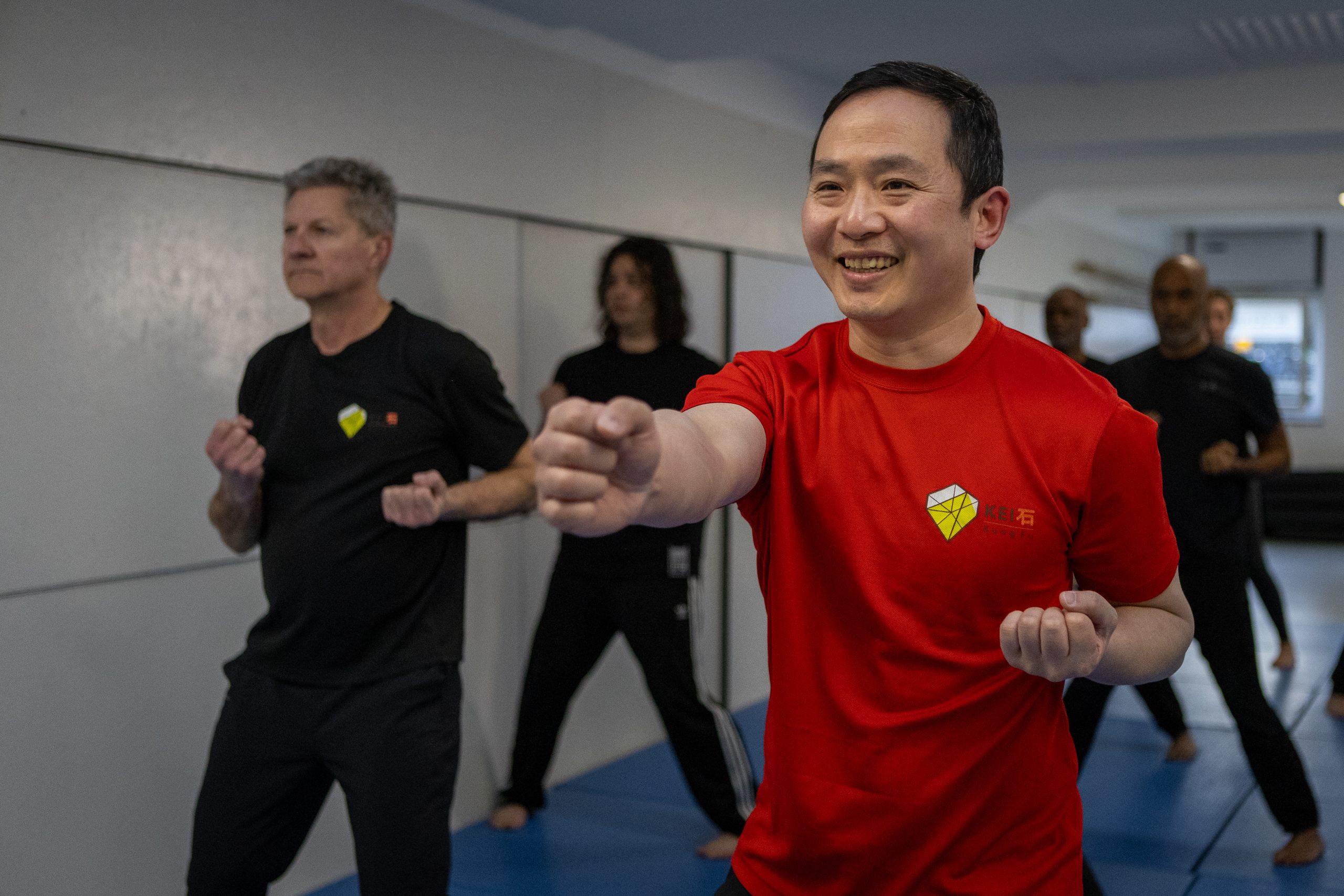
At KEI Kung Fu, in central Amsterdam, you learn to defend yourself through Wing Chun. Our lessons are structured from basic to advanced, so you join in at your own level and progress step by step. You train close-range techniques, but above all you work on the qualities you always carry with you: a stable posture, calm breathing, and the confidence to set boundaries. You can train every weekday evening and on several mornings, in a group where respect and safety come first.
Want to experience it for yourself? Request a free trial lesson and step into the hall with no obligation. The first step in self-defence is simply getting started. We provide the safe environment for you to do exactly that, at your own pace.