20 Aug, 2026
What is Qigong? Meaning, origins and benefits
We’ve all felt a flicker of inspiration watching a group of older Asian practitioners going through their exercises in a park. Partly thanks to that inspiration, the phenomenon is growing fast, with millions of people worldwide starting their day with qigong. Interest is growing in the Netherlands too, and that’s hardly surprising: we all feel overstretched and overstimulated from time to time, and this centuries-old Chinese movement practice helps with exactly that. But what actually is qigong, where does it come from, and what can it do for you? Read on to find out.
Qigong, also known as chi gong or chi kung, is a centuries-old Chinese movement practice that brings together calm movement, breathing and focused attention. Where many sports are all about faster, higher or stronger, qigong is about the exact opposite: slowing down, tuning in and coming back to yourself. Sounds like a welcome addition to a busy life, doesn’t it?
The meaning and origins of the term
The meaning of qigong lies in the two parts of the word. Qi stands for life energy: in Chinese tradition, this is the force that flows through your body and that you can either nourish or deplete. Gong means work, skill or dedication. Translated literally, qigong therefore means “working on your life energy”. The different spellings (qigong, chi gong and chi kung) all refer to the same practice; the difference simply comes down to the various ways of transcribing the same Chinese sounds into Western letters. They all mean exactly the same thing.
The roots of qigong stretch back thousands of years and are closely bound up with traditional Chinese medicine. Even if that means nothing to you, you’ve probably heard of acupuncture, for instance. The underlying principle of Chinese medicine is always the same: it aims to create a body in which your life energy can flow freely. The goal, of course, is to stay healthy and resilient, exactly what those older practitioners in the videos demonstrate.
Stress, tension or poor posture naturally disrupt that flow. With qigong, balance is restored because you combine slow movements with deep, calm breathing while focusing on your own body and mind.
The link with Kung Fu and Wing Chun
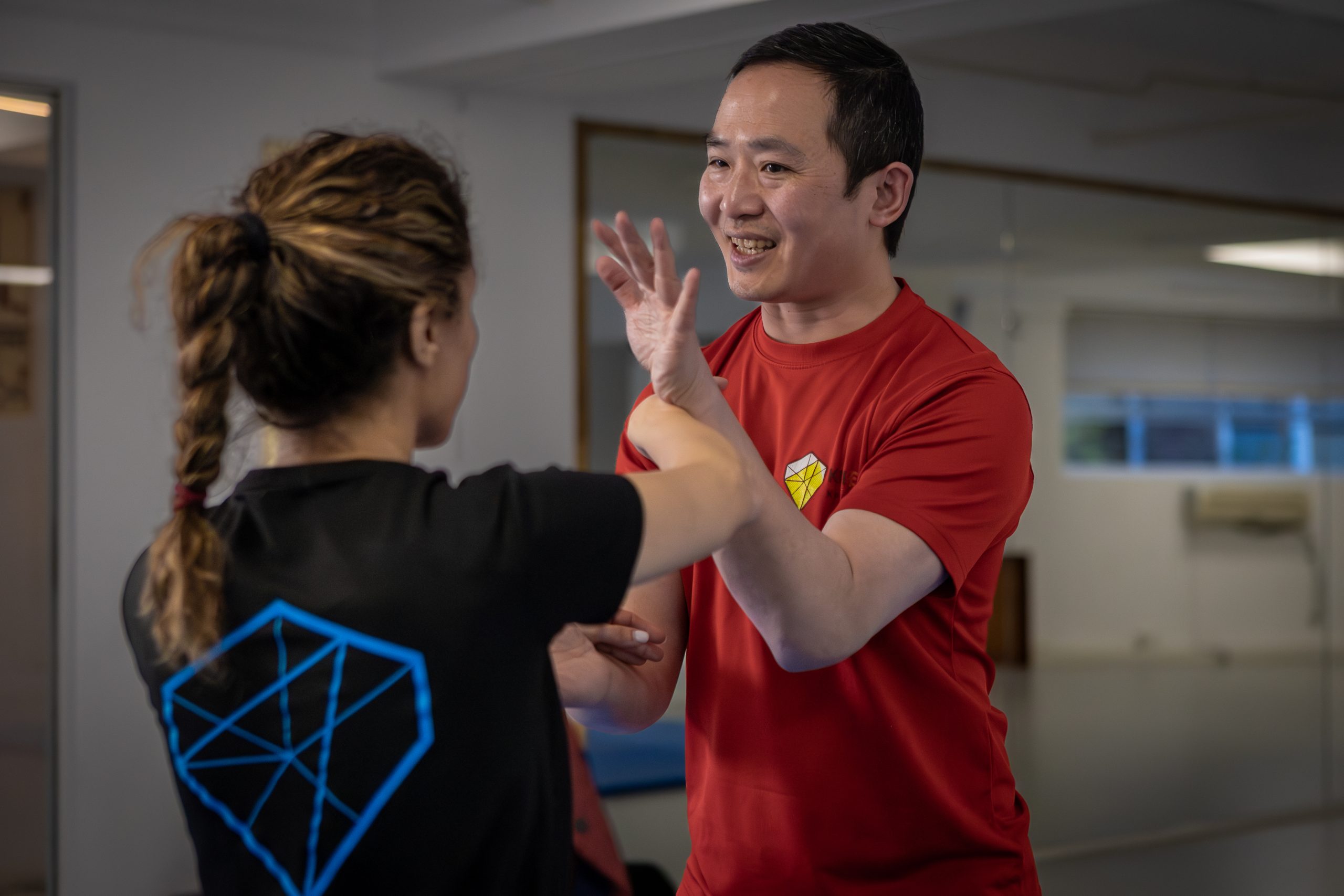
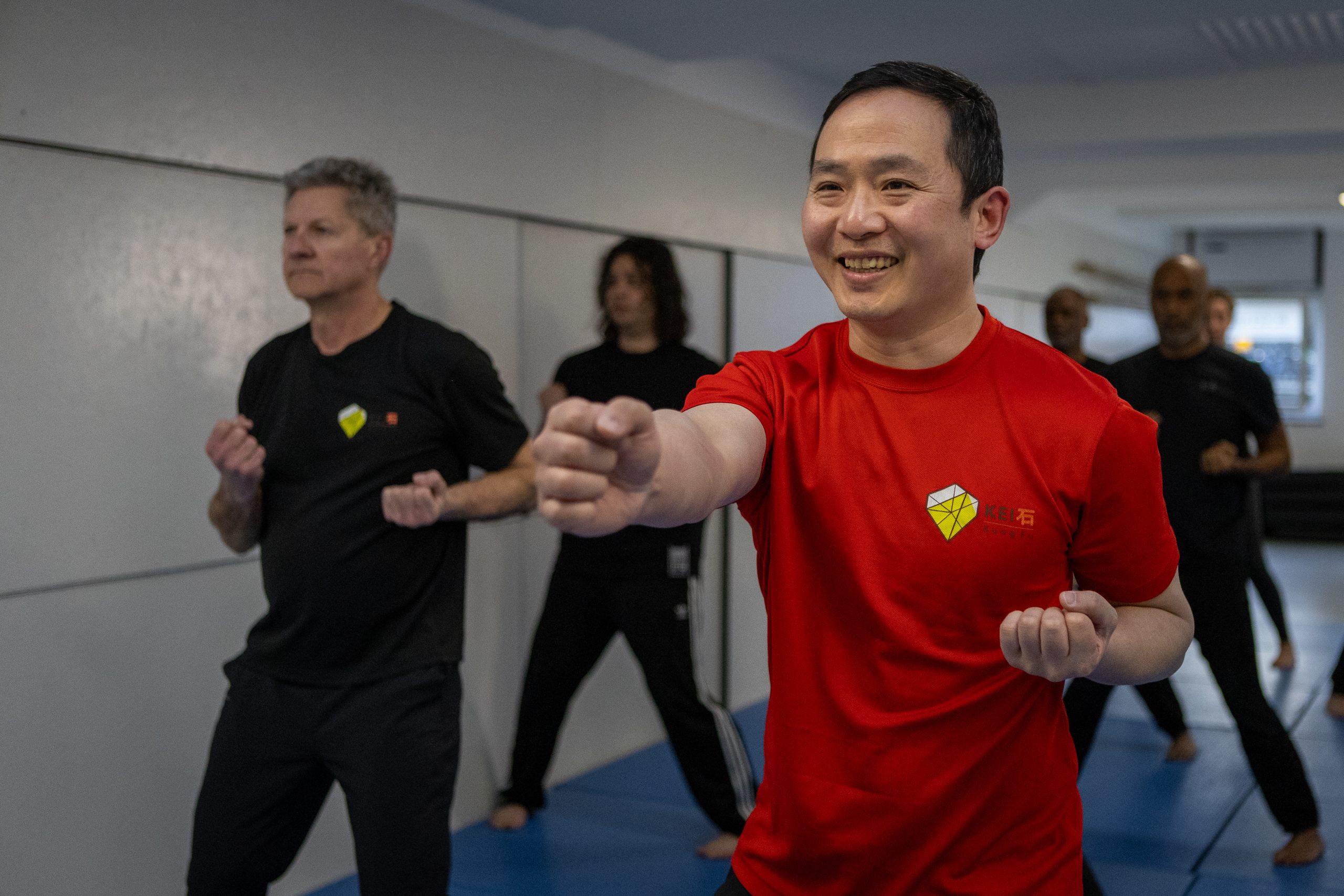
What many people don’t realise is that qigong and Chinese martial arts are inextricably linked. Kung Fu practitioners have used qigong for centuries to strengthen their body awareness, breathing and internal power. It’s also part of the foundation within Wing Chun, the style we teach at KEI Kung Fu in central Amsterdam. In Wing Chun, relaxation and timing matter more than muscular strength, and that’s precisely what you train through qigong.
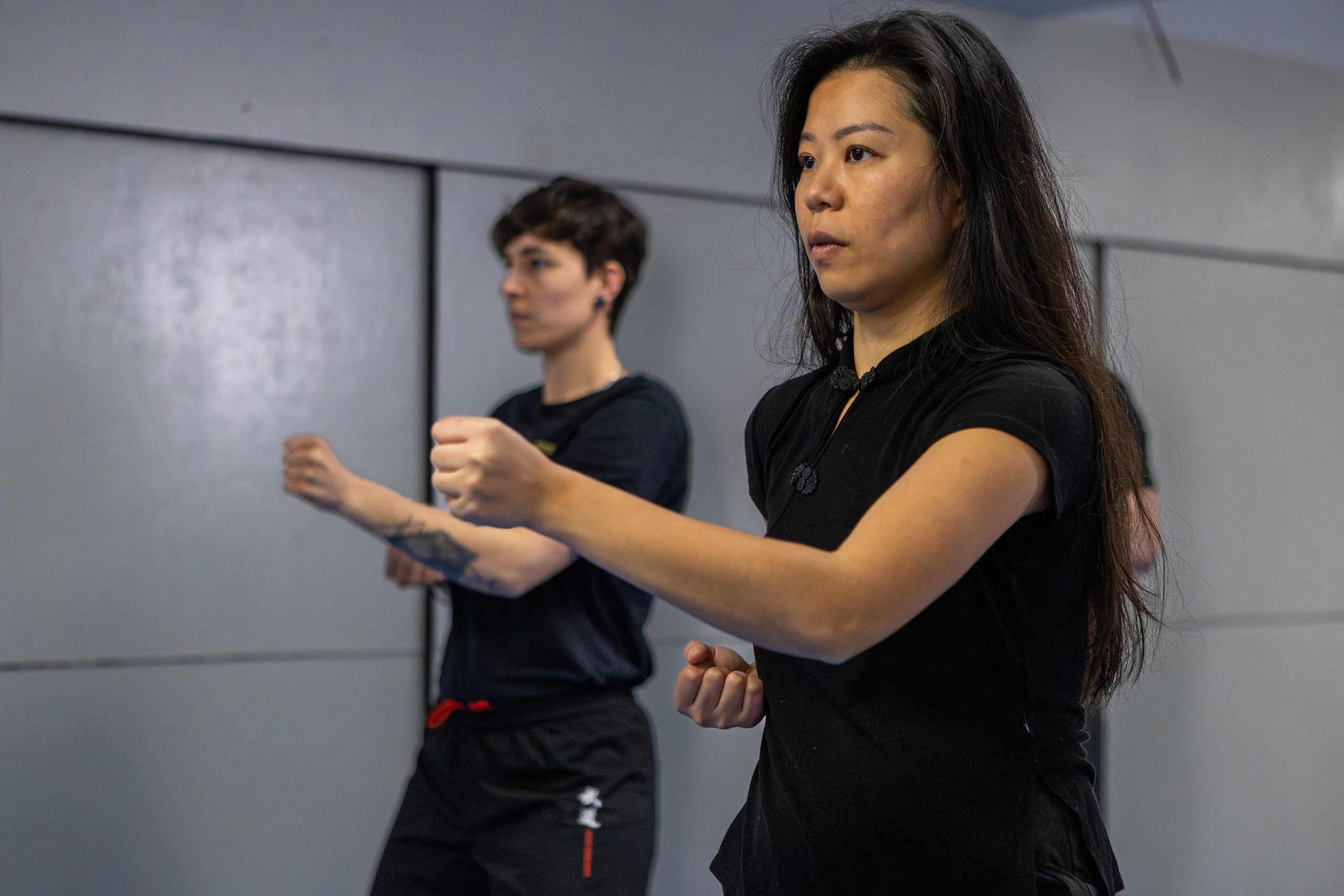
That’s why at KEI, we don’t see qigong as some airy-fairy add-on to the martial art, but as part of the foundation itself. In our Qigong Foundations classes, you work on relaxation, balance and inner energy, and connect that with the very same principles you’ll find in a Wing Chun lesson.
We offer Qigong alongside Wing Chun because the two reinforce each other. Qigong helps students build a better relationship with their breathing, posture, balance and body awareness, and to move with less unnecessary tension. You’ll notice those qualities in your Wing Chun training too: your movements become more relaxed, you become more aware of how you use your body, and you learn to stay calmer under pressure. In our experience, qigong helps build part of the very foundation that good Wing Chun rests on.
The benefits for body and mind
Research into qigong shows that it has a positive effect on stress, anxiety and conditions such as depression. Practitioners often notice more calm and more space in the body after just a handful of sessions. Qigong also improves your balance and posture, deepens your breathing and keeps joints and tissues supple. Because the movements are gentle and slow, they place barely any strain on your body, while you’re still genuinely training. That makes qigong suitable for everyone, from young to old.
Before you assume the effects are mainly physical, don’t underestimate how significant the mental impact of qigong can be. You give your mind a rest because all your attention goes to your movement and your breath. It’s little wonder, then, that many people describe qigong as meditation in motion, except you don’t need to sit still to find that calm. If you find it hard to sit for meditation, qigong might be exactly your thing.
Qigong versus yoga
Qigong and yoga do look similar. Both focus on combining movement, breathing and attention. Even so, there are clear differences. Yoga originates from India and relies heavily on static postures and stretching, requires a degree of flexibility, and uses a mat. Qigong originates from China, is almost always practised standing up, and revolves around flowing, repeated movements. You don’t need a mat, special clothing or strength for qigong, so you can practise it anywhere, anytime. That also makes the barrier to getting started much lower. We also often hear that for people who struggle with the flexibility yoga demands, qigong feels far more accessible.
Is qigong suitable for beginners?
As far as we’re concerned, qigong is the most beginner-friendly form of movement there is. The movements aren’t difficult to learn, the pace stays low, and you don’t need fitness, flexibility or prior experience. Young or old, fit or recovering from an injury: everyone can take part at their own level.
At the same time, don’t underestimate how much a good teacher can help. Sound guidance makes a real difference, especially in the beginning. An experienced instructor often notices what you can’t feel yourself, and can help you get your posture and breathing right from the start. Want to properly get to know qigong? You’ll be far better off in a class than following a video at home.
Curious how qigong feels for you? Come and experience it during a free trial lesson at KEI Kung Fu in central Amsterdam, and discover for yourself what this stillness in motion can do for you.