25 Jul, 2026
Wing Chun, Wing Tsun and Wing Tjun: the difference explained
Maybe you watched a film about Yip Man, read about Bruce Lee, or found a school near you. And that’s when the confusion set in. One person writes Wing Chun, another Wing Tsun, Wing Tjun or even Ving Tsun. Anyone wanting to learn the martial art naturally wants to know first: is this all actually the same thing, or are there important differences? This article answers that question and explains where all these names come from.
Search for wing chun and you’ll quickly come across a range of different names: Wing Chun, Wing Tsun, Wing Tjun, Ving Tsun and even Wing Tzun. Are these different martial arts? The short answer: no. All these spellings refer to the same Chinese martial art. In this article, you’ll read where the name comes from, why so many variants exist, and what makes this art so special.
What does the name Wing Chun mean?
Wing Chun originates from southern China and roughly means “eternal spring” or “praising spring”. According to legend, the art was named after Yim Wing Chun, a young woman who was the first to learn the style, from the Buddhist nun Ng Mui. Because, as a woman, she needed to be able to defend herself against opponents who were always bigger and stronger, the style revolves around efficiency rather than strength. In Wing Chun, you use direct movements and a solid foundation, and make use of your opponent’s own strength and momentum. This gives Wing Chun a distinctive character that appeals to a great many people.
Three spellings, one art
So why all these names? Chinese characters don’t translate easily into Western letters. Depending on the dialect and the transliteration method used, different spellings have emerged, such as Wing Chun and Ving Tsun. Marketing also played a role: some lineages (the lines of transmission from master to student) deliberately chose their own spelling to set themselves apart. Wing Tsun, for example, has been the trademark of grandmaster Leung Ting’s organisation since the 1970s, while other schools use Wing Tjun or Wing Tzun. Different names, then, and sometimes slightly different emphases in teaching style, but at its core, always the same art with the same roots.
The link with Wing Chun Kung Fu
You’ll often come across the term wing chun kung fu, and that’s entirely accurate: Wing Chun is a style within Kung Fu, the umbrella term for the Chinese martial arts. Within that larger family, Wing Chun is one of the most practical and compact styles. Its best-known practitioner was grandmaster Yip Man from Hong Kong, who had a famous student by the name of Bruce Lee. Between them, they’re largely responsible for Wing Chun being one of the most widely practised Kung Fu styles in the world today.
Our Wing Chun comes mainly from the Yip Man lineage, although over the years our instructors have also trained with other teachers and explored other approaches to the art. We use the spelling “Wing Chun” because it’s the most internationally recognised name, making it easier for people to find and understand the art. We respect the tradition and principles of Wing Chun, but we don’t believe a martial art should stand still in time. Our approach combines traditional training with modern methods, such as pressure testing, various forms of partner work, and insights from other martial arts and movement disciplines. The aim is to preserve what makes Wing Chun unique, while continuing to test and develop how we train it.
Wing Chun as self-defence
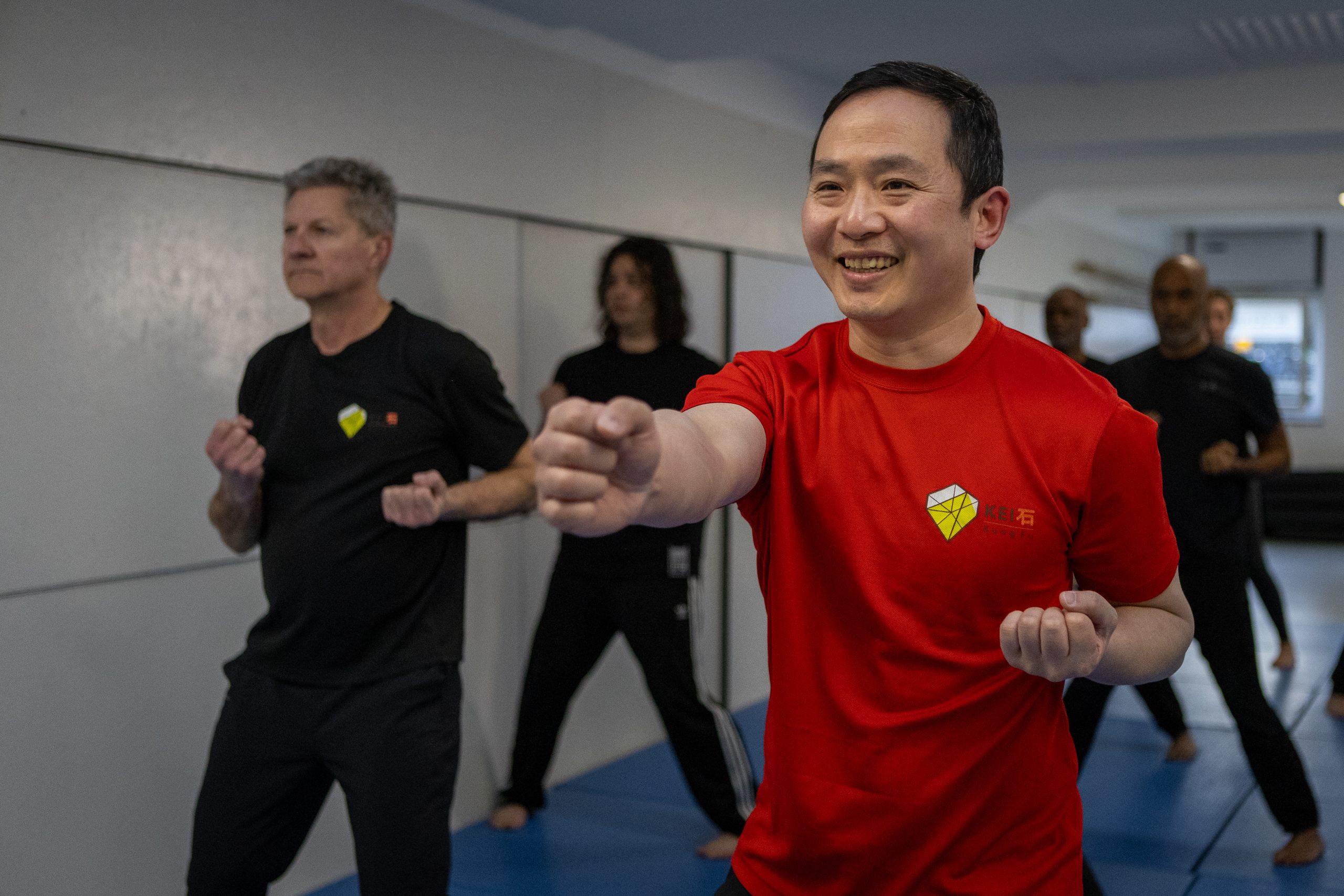
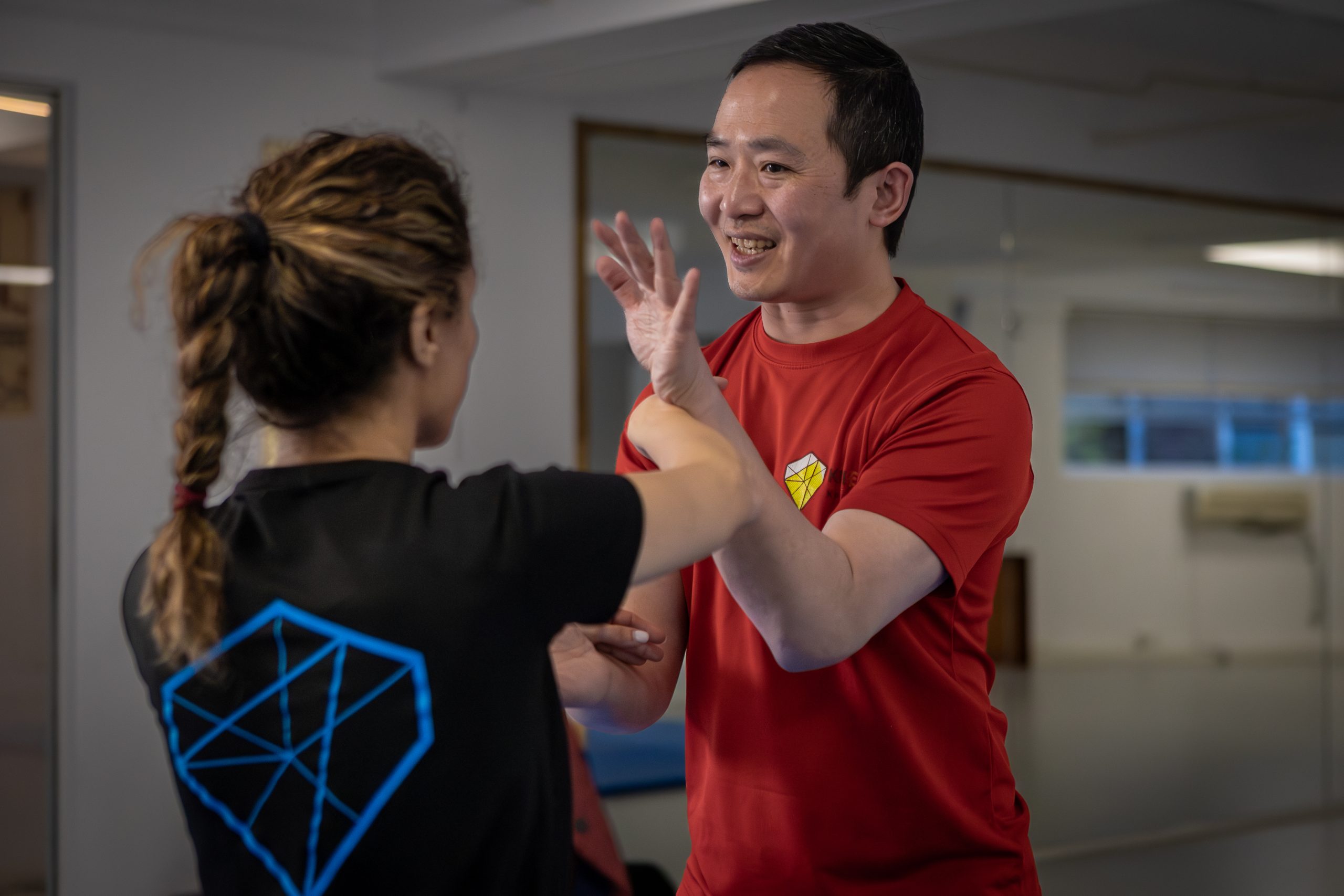
Wing Chun, then, revolves around close-range self-defence, the range at which real confrontations almost always take place. The techniques are short, fast and direct, without wasted movement. You learn not to block an attack with force, but to redirect it through the right movement and timing. Exercises such as chi sao teach you, through contact, to sense what your partner is doing before you even see it. Because the system doesn’t rely on muscular strength or flexibility, it’s suitable for everyone, regardless of age or build. That also explains why you’ll find such a mixed group in many Wing Chun classes: from students to people in their fifties, small and tall, beginners and advanced practitioners all training together in one group.
Learning Wing Chun at KEI
At KEI Kung Fu, you train Wing Chun in central Amsterdam, in an academy built entirely around the principles of this art. Since its founding in late 2020, KEI has grown into a school with hundreds of members, from children to adults and from beginners to advanced practitioners. You work through a clear structure of twelve levels, from student to black belt, under the guidance of Sifu Lai-Wing Hau and a team of experienced trainers. Tradition and modernity go hand in hand here: centuries-old principles, taught in a contemporary way. And that goes for our school itself too, a bright, fresh space where you can train and learn with real enjoyment.
And however you spell it, there’s only one way to learn Wing Chun: by doing it. So request a free trial lesson today and experience it for yourself at KEI in Amsterdam.