20 Jul, 2026
Qigong exercises: 10 exercises to try today
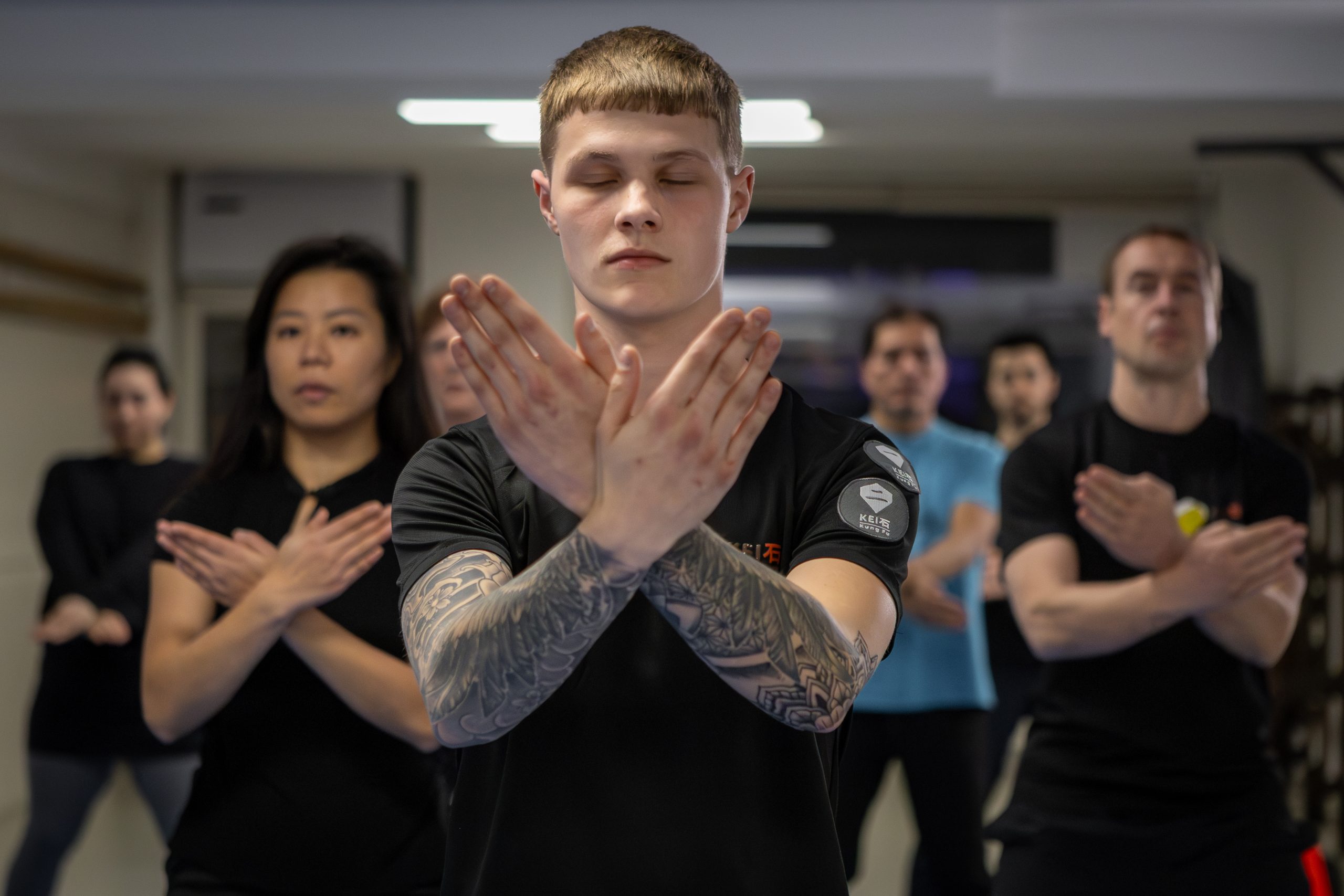
More energy, less tension and a calmer mind. That’s what qigong promises, and it’s been living up to that promise for centuries. The best way to find out what it does for you is simply to get started. That’s why this article gives you ten exercises you can begin with today.
You don’t need any experience, equipment or special space to start with qigong. A couple of square metres and ten minutes of focused attention are enough. In this article, you’ll find ten qigong exercises, five aimed at your breathing and five aimed at stress, that you can try out today. You’ll also read what makes a good exercise and how often you’re best off practising.
What makes a good qigong exercise?
You’ll find endless chi kung exercises online, but it’s not the shape of the movement that makes the difference. A good exercise combines three things: a relaxed, upright posture, calm belly breathing, and attention to what you’re doing. Move smoothly but with your shoulders hunched up, and you won’t get the full benefit of the exercise. Equally, if you perform the movement perfectly but your mind wanders off, that’s a wasted opportunity. So start every exercise with a moment of stillness: feet hip-width apart, knees slightly bent, crown of the head lifted, breathing down into your belly.
Five breathing exercises
- Belly breathing while standing. Place your hands on your belly and breathe so that your hands move with it, four counts in and six counts out. This is the foundation for everything that follows.
- Lifting the ball. Breathe in as you slowly raise your arms in front of your body as if lifting a large ball, and breathe out as you lower them. Link the movement entirely to your breath.
- Opening the chest. Bring your arms out to the sides at shoulder height as you breathe in, and close them again in front of your chest as you breathe out.
- Pushing up the sky. Interlace your fingers, turn your palms upwards and stretch your arms above your head on the in-breath. Let everything go on the out-breath.
- Standing meditation. Stand still with your arms forming a wide circle in front of your chest, as though embracing a tree, and follow your breathing. Start with one minute and build up gradually.
Five exercises against stress
- Rolling the shoulders. Slowly roll your shoulders backwards in time with your breath. Simple, but highly effective for tension in the neck and shoulders.
- Parting the clouds. Cross your arms in front of your body, raise them, and “push” them apart at shoulder height. A classic movement from the Ba Duan Jin, a centuries-old sequence of eight exercises.
- Twisting side to side. Rotate your upper body loosely from left to right, letting your arms swing freely with the movement. This motion effectively massages your lower back.
- Tapping and rubbing. Gently tap your arms, legs and lower back with loose fists. This gets the blood flowing and pulls you out of your head and into your body.
- The wave. Send a slow wave-like movement through your spine, from lower back up to the crown of your head. Finish with three deep breaths.
How often and how long should you practise?
Ten minutes every day beats one hour once a week. Qigong works through repetition: short, regular sessions calm your nervous system more effectively in the long run than a single lengthy session. Pick a fixed moment, straight after getting up or after work, for example, and don’t make it too big or ambitious. Building a small habit is what makes it sustainable. If, after a couple of weeks, you find yourself naturally looking forward to your practice moment, you’re doing it right.
Joining a qigong workshop at KEI
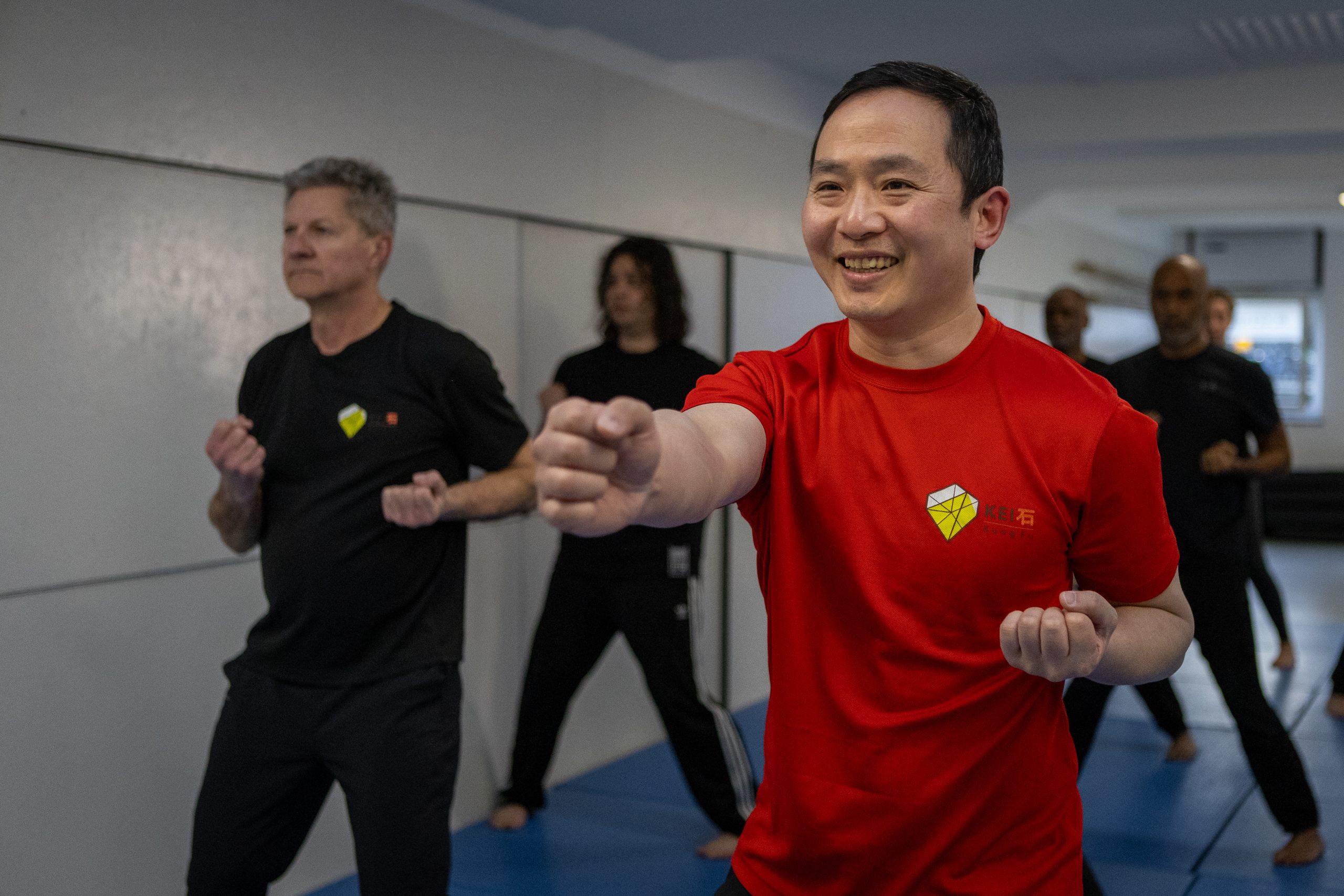
Practising on your own is a great start, but you learn the real depth of qigong from a teacher who can fine-tune your posture and breathing. At KEI Kung Fu in central Amsterdam, we run weekly Qigong Foundations classes and regularly organise a qigong workshop for anyone wanting to get a taste of it, or to go deeper.
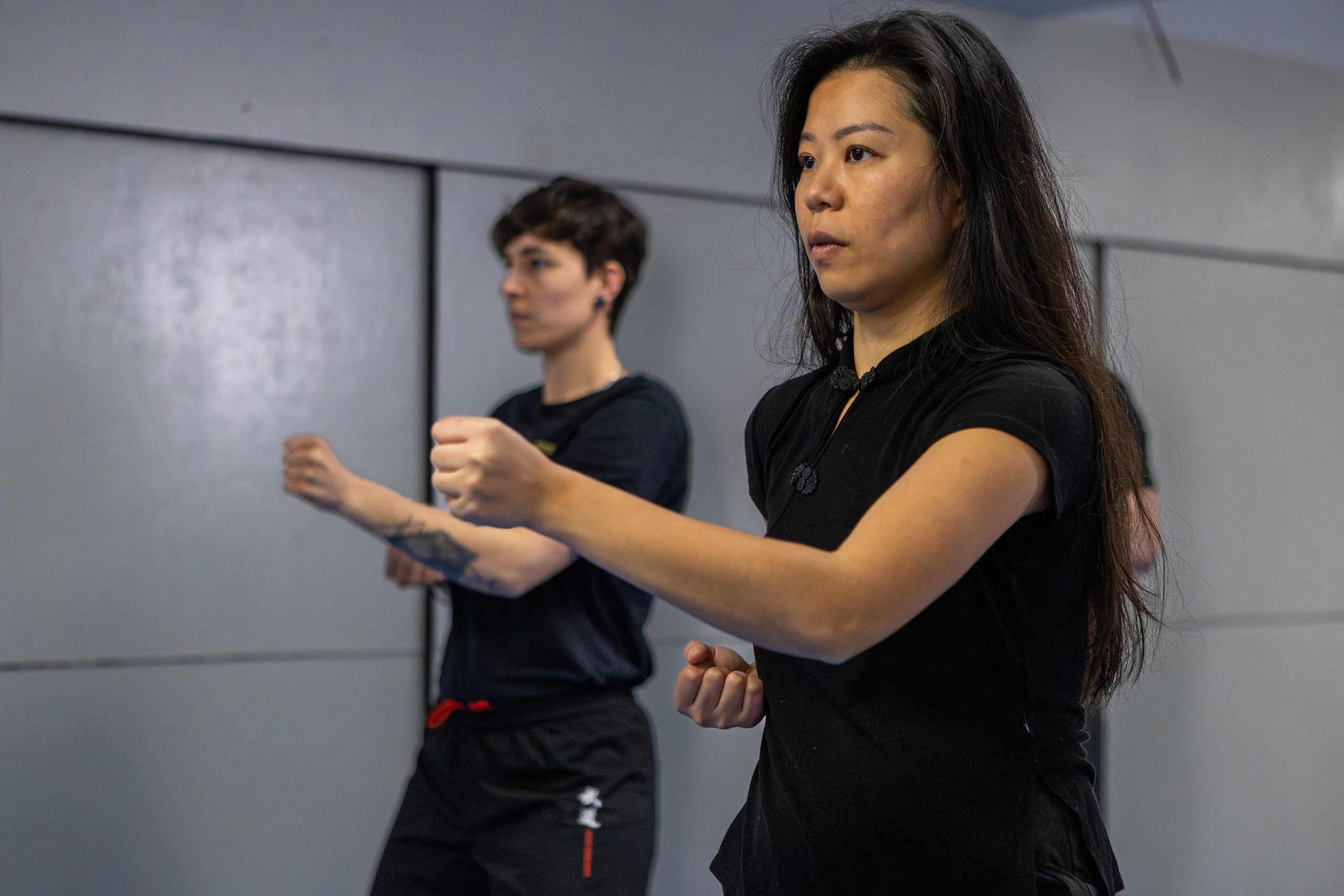
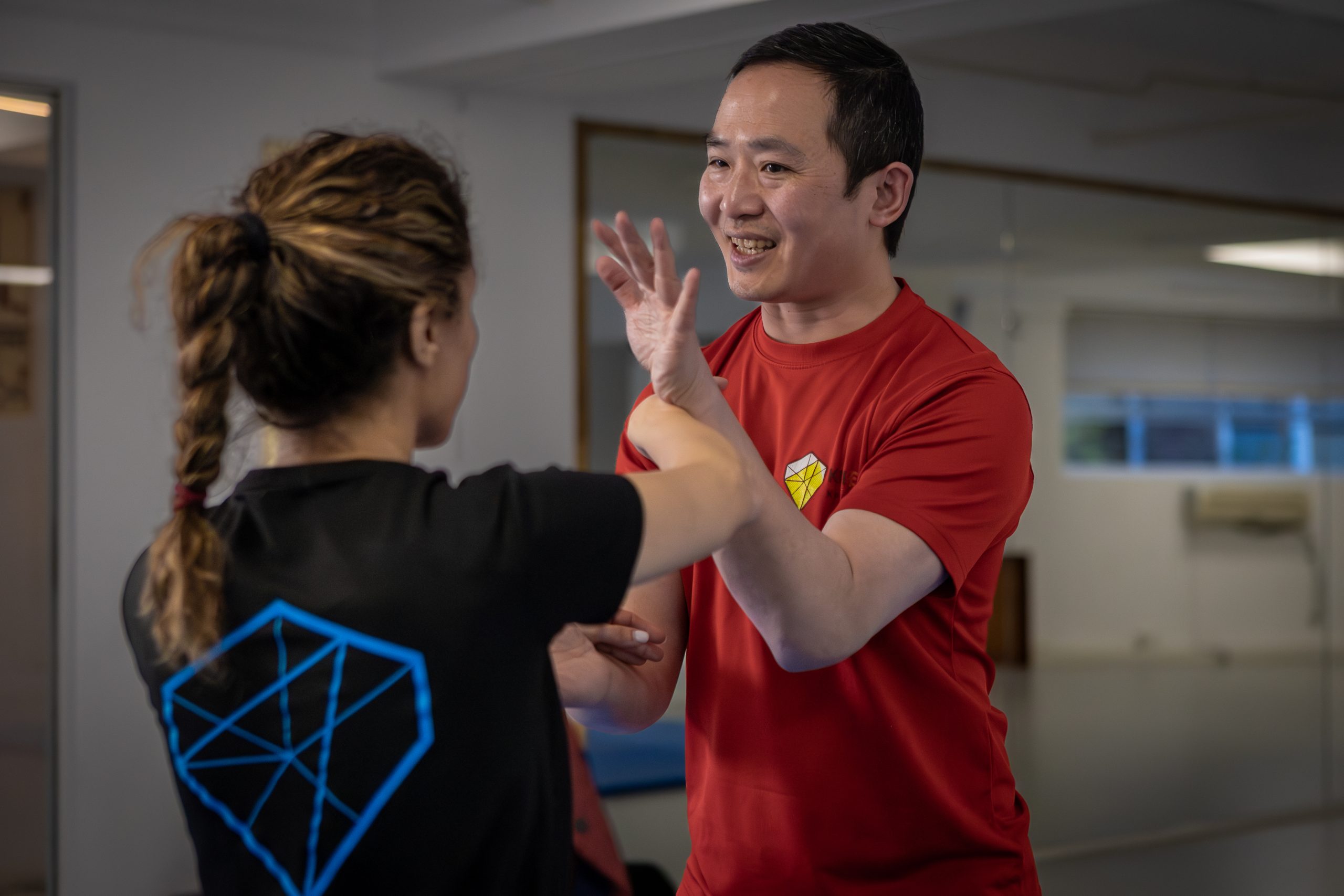
A Qigong class at KEI usually begins with a brief mindfulness exercise to settle the mind and bring your attention into the here and now. A gentle warm-up follows, loosening the body and preparing it for the main part of the class. This typically consists of breathing exercises, movement exercises and sometimes a qigong form. We then move on to partner work, where you get a better feel for the key principles by putting them into practice. We close the class with a short meditative exercise, so body and mind can settle before you head home. You don’t need any experience, and the classes are suitable for anyone interested in relaxation and greater body awareness.
Fancy a no-obligation taster? Request a free trial lesson and join in for a session. Within a single class, you’ll notice exactly what proper guidance adds to the exercises from this article.